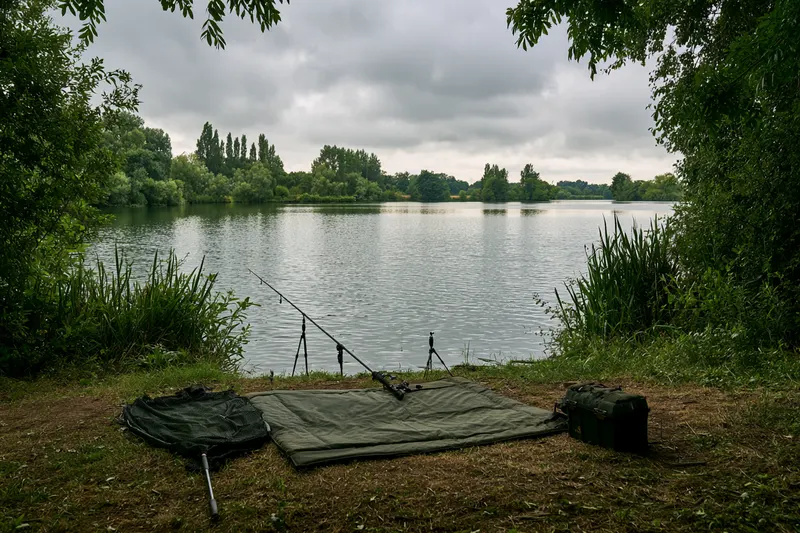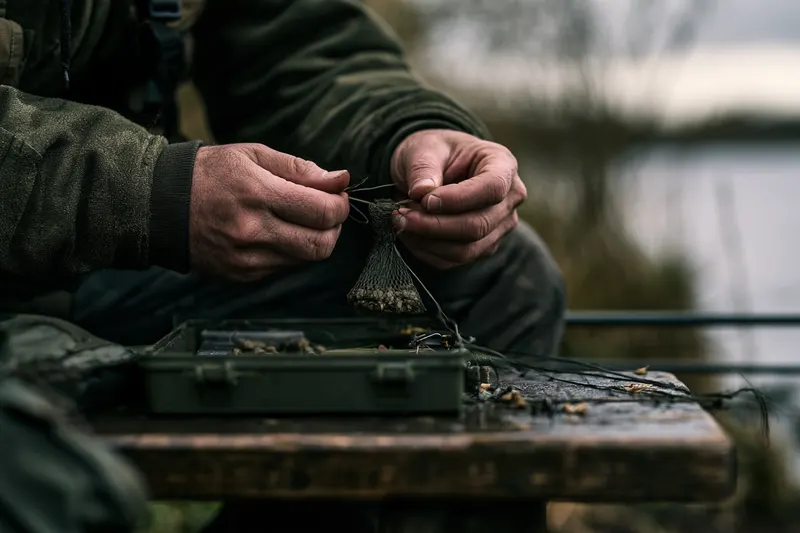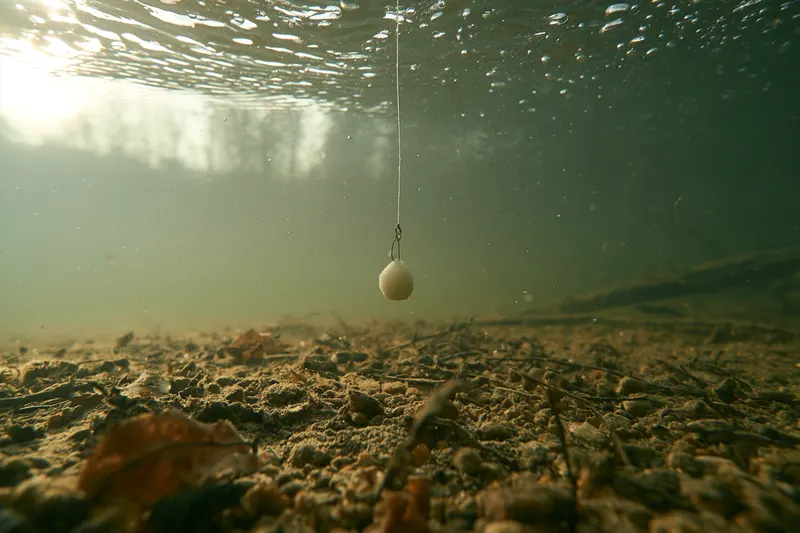
A zig rig is a buoyant hookbait on a long hooklength, so it fishes in mid-water rather than on the lakebed. The hooklength sets the depth. Korda says zigs shine in spring, when carp sit in the upper layers, but can work all year whenever fish are not feeding on the bottom.
How does a zig rig work?
A zig rig works by popping a buoyant hookbait up off the lead on a long hooklink, so the bait hangs at a set depth, Korda explains. The longer the hooklink, the higher the bait sits.
The lead usually goes on a lead clip, so it can release when a carp is hooked. The aim is to target carp that are feeding in mid-water, where a bottom bait would sit unseen beneath them.
When should you use a zig?
Zigs work best in spring, according to Korda, when carp are waking up, cruising high in the water and sometimes feeding on daphnia blooms.
They are not only a spring tactic. Angling Times angler Finley Todhunter says zigs can be effective at all times of the year. Korda adds that air pressure, moon phase and changes between sun and cloud can push carp higher, and that zigs catch at night too. For cold-water tactics on the bottom, see our winter carp guide.
Fixed or adjustable zig?
A fixed zig suits water up to about 10ft deep, while an adjustable zig is better for deeper swims, because Korda says casting, landing and a swinging lead become problems beyond 10 to 12ft.
Fixed vs adjustable zig
| Fixed zig | Adjustable zig | |
|---|---|---|
| Best depth | Up to about 10ft | Deeper water |
| Depth set by | Hooklength length | Float and main line |
| Depth measured from | The lakebed | The surface |
| Need to plumb? | Yes | No |
| Typical hooklength | Matches chosen depth | Around 4ft |
On a fixed zig you plumb the swim and tie the hooklength to the depth you want. The adjustable version runs the main line through the lead and a clear in-line float. A hooklength of around 4ft is typical, and you set the bait below the surface rather than above the bottom.
How do you set the depth on an adjustable zig?
An adjustable zig is set by letting the float rise, then pulling it down one foot at a time from the surface, Korda says.
Setting an adjustable zig
- Cast and waitLet the float rise to the surface.
- Tighten slowlyRod in the rest, until the float just shows.
- Pull downDraw the float down one foot at a time.
- Bait at surfaceOnce you have wound back the hooklength length.
- Go deeperEach extra foot puts the bait a foot deeper.
- Go shallowerLet off a foot of line at a time.
Start a foot or two under the surface if you can see fish high in the water. If not, fish lower, where you expect them. Korda says a change of only six inches can make a difference, so note each rod's depth on your phone and match the others when one catches.
Which hooklength and hookbait should you use?
A zig hooklength should be monofilament, because Korda says fluorocarbon sinks and does not suit zigs. Its Zig Line comes in 7lb, 9lb and 11lb.
Heavier line cuts bites, while much lighter line risks break-offs. Use a smaller hook than on the bottom, since it is easier to see in mid-water; Korda recommends its Mixa down to size 12. Foam is the most popular hookbait, with black a common colour, and a fleck of yellow or pink can help.
Tying a fixed zig
- Hair loopTie a small overhand loop in the Zig Line.
- HookbaitThread on foam or a small pop-up, add a hair stop.
- Knotless knotWhip 10 to 12 turns down the shank, back through the eye.
- SiliconeSlide about 10mm of tubing over the eye.
- End loopTie a figure-of-eight loop, not an overhand knot.
- LeadInline lead, or a lead clip in weedy swims.
How long should you leave a zig out?
A zig is typically left out for 1.5 to 2 hours before changing it, Finley Todhunter told Angling Times, and 45 minutes is the shortest he recommends, only when lots of carp are present.
How long to leave a zig
Todhunter starts with three rods at three depths. In a 12ft swim with carp near the surface, that could be 9ft, 10ft and 11ft zigs. If nothing happens after a few hours, he shortens the zig or changes the hookbait. Spodding over zigs is a summer tactic, not a winter one. Fishery rules on rigs vary, so read them first; our carp beginners' guide covers typical rules.
Questions we get asked
Can I use fluorocarbon for a zig?
No. Korda says fluorocarbon sinks, so it is not suitable for zigs. Use a clean monofilament zig line.
Do zigs work in winter?
Yes, at times. Korda says zigs can work any time of year when carp are not feeding on the bottom, though spring is the main season.
How many rods should I put on zigs?
3, at three different depths, is how Finley Todhunter starts. He advises against fishing a zig on only one rod or for just a couple of hours.
What colour foam is best?
Black is a common choice, Korda says, and adding a fleck of yellow or pink can help. Small pop-ups or cork with maggots are alternatives.
Plumb the swim, set three zigs at three depths on mono hooklengths, and give them time. Use a fixed zig up to about 10ft and an adjustable one in deeper water.
References
- How to use a zig rig for carp fishing (Korda) — When to use, fixed vs adjustable, depth setting, line, hooks, hookbaits.
- How to tie a zig rig (Korda) — Step-by-step tying, knotless knot, loop, lead arrangement.
- How to fish with zigs, Finley Todhunter, by James Furness (Angling Times, updated 29 April 2024) — Three rods at three depths, soak times, spodding in summer.