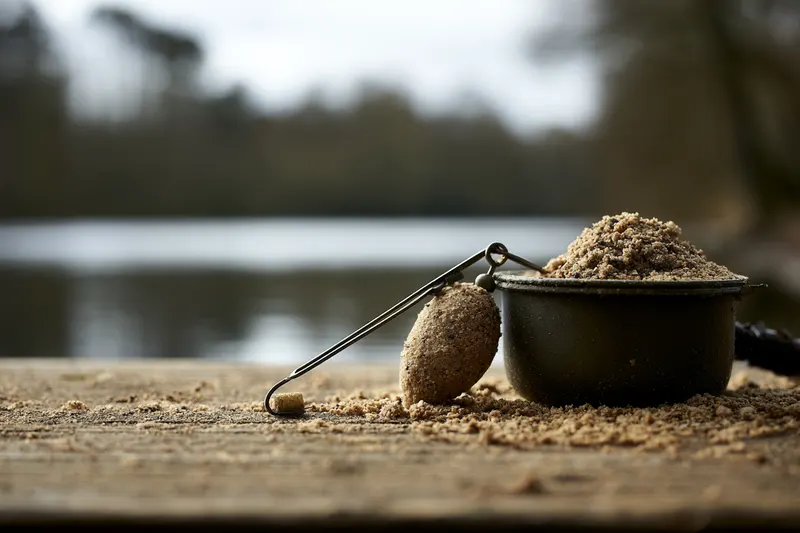
A method feeder is a weighted frame that you pack with pellets or groundbait, with a short hooklength of about 4in so the hookbait sits right next to the feed. Fish find a small pile of food, graze it and pick up the hookbait almost straight away.
How does a method feeder work?
A method feeder works by putting a tight pile of pellets or groundbait right beside your hookbait, according to Angling Times. The mix is moulded around the frame, survives the cast and the drop, then breaks down on the bottom.
Timing is everything. If the bait falls off as the feeder hits the water or on the way down, Angling Times warns that it draws fish away from your hookbait instead of towards it.
Because the hooklength is so short, a fish that takes the bait soon feels the weight of the feeder. That is why Angling Times advises a rod rest that stops the rod being pulled in, and a fairly slack quivertip.
How do you set up a method feeder rig?
A method feeder rig needs only an in-line feeder, a bead, a swivel and a short hooklength. Guru's set-up guide threads the main line through the feeder stem, adds a Speed bead and locks a swivel with a Palomar knot.
Tying an in-line method rig
- Thread the feederPass the main line through the in-line stem of the feeder.
- Add a beadSlide a quick-change or speed bead onto the main line.
- Tie the swivelLock a swivel to the main line with a Palomar knot and trim the tag.
- Attach the hooklengthClip on a hooklength of about 4in with a hair or band.
- Mould the feedPack pellets or groundbait round the frame, hookbait beside or in the ball.
For carp, Angling Times prefers a short, soft braided hooklink tied with a knotless knot, at around 4in. On commercials, one of its match anglers uses a size 14 hook on a 4in hooklength of 0.20mm line.
Which feeder size should you use?
A 20g method feeder is a sensible starting size, and Angling Times' match angler steps up to a large feeder only when the peg is solid with fish. In deeper water he switches to a 30g pellet feeder that goes straight to the bottom.
For longer sessions, Angling Times suggests carrying a couple of sizes to match your casting distance.
Pellets or groundbait: which method mix is better?
Pellets suit most method feeder sessions because they stay in a tight group, while groundbait fans out wider and breaks down faster. Angling Times favours groundbait in 2ft of water or less, where a quick bite matters.
Pellets or groundbait on the method
| Micro pellets | Groundbait | |
|---|---|---|
| Spread on the bottom | Tight group | Fans out wider |
| Breakdown speed | Slower | Faster |
| Best situation | Most sessions | 2ft of water or less |
| Main risk | Too wet, turns to mush | Too damp, hides hookbait |
Groundbait should be mixed fairly dry so it just stays on for the cast. Too damp, and the ball stays intact and hides the hookbait. For carp, Angling Times builds a mix of hemp, pellet and corn, bound with a matching liquid, in about five minutes.
How long should you soak micro pellets?
Micro pellets for the method need a short soak and then a rest, but published timings vary. Pour on water, drain, and give the pellets time to soften all the way through before you mould them.
Micro pellet preparation times quoted
The test is the same everywhere: a handful should squeeze together under light pressure and break apart again. Over-wet pellets turn to mush, and brands, and even batches, differ in how sticky they are.
Which hookbait works on the method?
A small, balanced hookbait works best on the method feeder: imitation corn, a dumbbell, a fluoro wafter or a 12mm boilie, according to Angling Times. A wafter offsets the hook's weight and helps when fish are only lightly hooked.
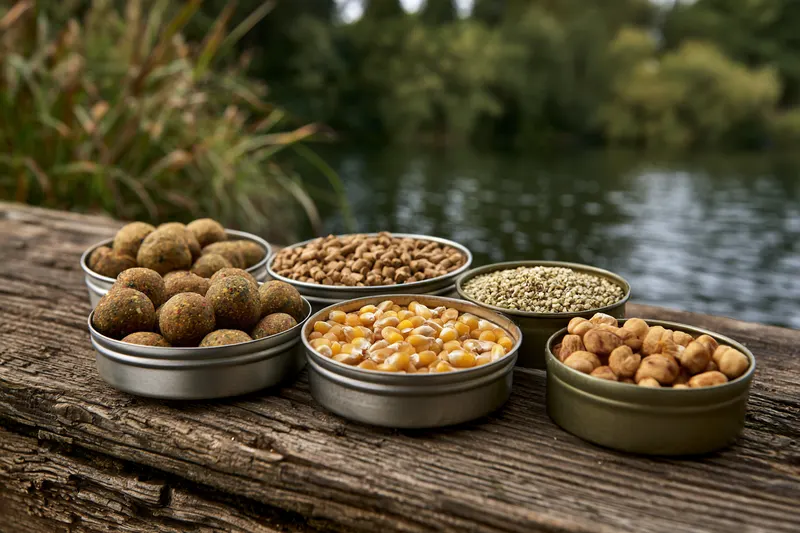
Another tip is to use a pellet slightly larger than the feed, such as a 6mm or 8mm on the hook over 4mm feed pellets. Our guide to the best carp baits, from pellets to boilies explains which bait suits which venue.
How often should you recast?
Recasting every 20 minutes or so builds a feed area on a method feeder, while a static rod can stay out for about an hour. Angling Times starts carp sessions with around eight casts with a full feeder.
New to commercials? Start with coarse fishing for beginners for the licence and the basics, or carp fishing for beginners for safe rigs and fish care.
Method feeder quiz
01What hooklength is usually quoted for the method?
Angling Times and Guru both give around 4in, so the hookbait sits next to the feed.
02When does groundbait beat pellets, according to Angling Times?
Groundbait breaks down faster, which gives quicker bites in shallow water.
03What happens if groundbait is mixed too damp?
Angling Times says to mix it dry enough to just stay on for the cast.
04How often does Angling Times recast a roaming method rod?
A static rod stays out for about an hour; the roaming rod is recast every 20 minutes or so.
Pick an answer – the explanation appears straight away.
Questions we get asked
Do you need to strike on the method feeder?
No, not in the usual sense. The short hooklength means the fish feels the feeder's weight quickly, so Angling Times advises a slack quivertip and a rod rest that stops the rod being pulled in.
Do micro pellets need soaking for the method?
Yes. Dry micros will not mould round the frame; Angling Times soaks them for about a minute, drains them and leaves them at least 10 minutes to soften through.
How heavy should a method feeder be?
20g is a common starting point on commercials. Angling Times' match angler steps up to a larger feeder for a busy peg and a 30g pellet feeder for deeper water.
Should the hookbait go inside the ball of feed?
Yes, it can. Many anglers bury it in the mix with a mould, but for big carp Angling Times sets it beside the ball so the rig cannot flick back and tangle.
Keep the hooklength short, the mix firm enough to survive the cast but quick to break down, and recast regularly to build the swim.
References
- How and when to use groundbait on the Method feeder (Angling Times) — Feeder sizes, 2ft depth, mix consistency, 4in hooklength and size 14 hook.
- How to fish the Method feeder for big carp (Angling Times) — Braided hooklink, 4in rig, hookbaits, hemp-pellet-corn mix, recasting.
- How to improve your Method feeder fishing (Angling Times) — How the feeder works, micro pellet prep, squeeze test, hookbait sizes.
- How to prepare pellets for fishing (Angling Times) — 20 to 30 minute soak, consistency check.
- How to set up an in-line hybrid method feeder (Guru Tackle) — Manufacturer set-up steps and 4in hooklength.
- How to soak the perfect micro pellets (Guru Tackle) — 2 minute soak, drain, 30 minute rest.